

When Did Existing Become a Monitored Activity?
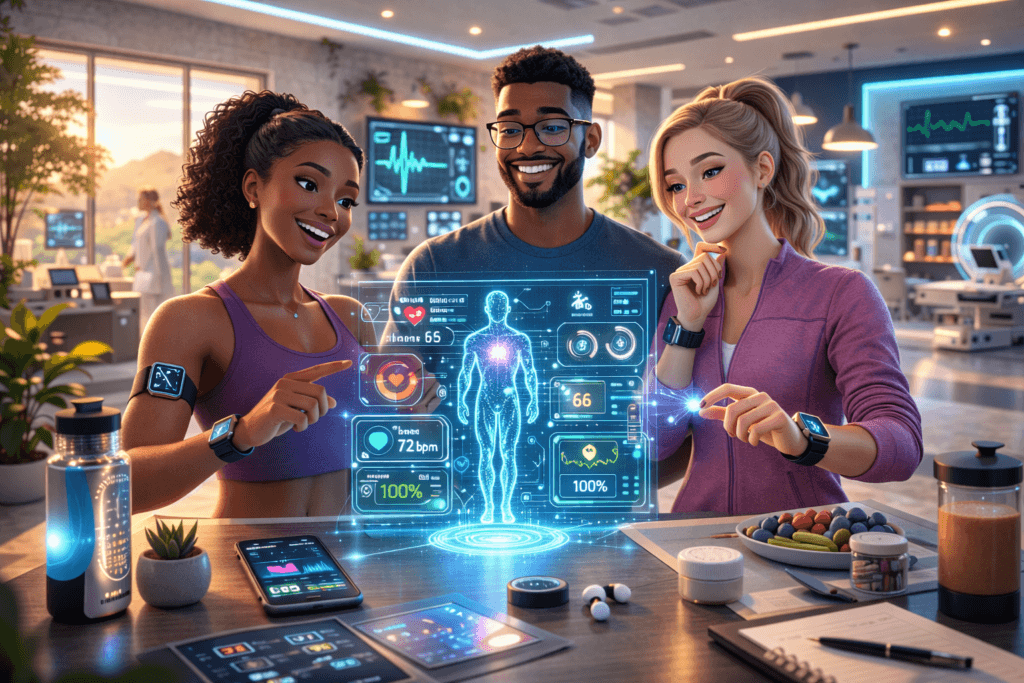
Once upon a time, you only knew your heart rate when you sprinted up stairs and felt like something inside you was filing a formal complaint. Now your watch tells you before you even finish the climb. We live in an era where wellness and technology have merged in ways that would have sounded like science fiction to anyone born before the internet. Calories burned, steps taken, glucose levels, hours slept, stress tracked: all of it measured, graphed, and stored in a cloud server you have never visited. For some people this is genuinely empowering. For others it feels like homework for simply existing.
Take Melissa, who got her first smartwatch as a birthday gift. She thought it was just for counting steps. Within a week she was checking her resting heart rate, sleep cycles, and blood oxygen levels, monitoring herself like a science project that happened to breathe and pay rent. Oddly enough, she liked it. She felt in control, like she finally had insight into the machine she had been living inside her entire life without ever reading the manual.
This marriage of wellness and technology reflects a larger cultural shift. People do not want vague advice anymore. They want data. They want feedback loops. They want to know not just “eat better” or “sleep more” but exactly how their body responds to every bite and every bedtime. It is a fascinating experiment, equal parts exciting and slightly absurd. Exciting because the tools can actually change lives. Absurd because we are now genuinely stressed about whether a sleep score was an 82 or an 83. Either way, wellness is no longer just about how you feel. It is about what your devices say about how you feel, and that changes the entire conversation.
Wearables: When Your Watch Became Your Health Coach
Remember when watches just told time? That era is over. Wearables now sit on millions of wrists, quietly recording every heartbeat, every step, and occasionally every stress spike you were hoping nobody would notice. For many people, wearables have become not just accessories but genuine health tools. They remind you to stand up, breathe, and stop slouching with the posture of someone who has given up on the concept of a spine.
Consider Brandon, a thirty-two-year-old accountant who bought a fitness tracker to motivate himself to move more. He expected mild guilt and a few extra steps. What he did not expect was how attached he would become to the feedback loop. On days when his tracker buzzed to remind him to walk, he obeyed like it had managerial authority. When he hit his step goal he felt genuinely proud. When he did not, he felt like something had gone wrong with the day. The device was helpful and strangely controlling in almost equal measure, and the line between those two things kept shifting.
Wearables succeed because they turn health into something that resembles a game. Badges, streaks, movement reminders: it is wellness disguised as something more entertaining than it has any right to be. And it works. People are walking more, catching irregular heart rhythms earlier, and noticing physical patterns they previously would have missed entirely, all because of something strapped to their wrist. The catch is that when the data starts ruling your decisions rather than informing them, you end up living for the numbers instead of for yourself. Brandon once skipped dinner with friends because he had not hit his daily steps yet. That was the moment he realized the gadget had quietly accumulated more influence over his choices than he had consciously assigned it.
Wearables are not going away, and the case for them is genuinely strong when they are used well. The key distinction is between using data as a guide and using it as a verdict. The numbers can tell part of your story. They cannot capture the quality of a slow walk you took without checking your wrist once, or the specific value of laughing too hard at dinner until something hurts. Those things matter too, and no dashboard has figured out how to measure them yet.
Health Tracking: From Guesswork to Graphs
Before health apps, most people operated on vague impressions of their own habits. You thought you slept okay. You assumed you ate enough protein. You believed you were active most days, a belief that did not always survive contact with actual evidence. Now there is no need for assumptions. Meals, moods, menstrual cycles, water intake, and stress patterns can all be logged, graphed, and analyzed across weeks and months. It is like hiring a full-time analyst for your body, one who never sleeps and has strong opinions about your lunch choices.
Take Priya, a college student juggling classes, work, and late-night study habits that leaned heavily on caffeine and processed carbohydrates. She downloaded a health app to track her nutrition and immediately discovered that her protein intake was so low her muscles were essentially running on optimism. The initial insight was genuinely useful. But she went further than useful, logging every bite with the precision of someone who had confused wellness with a compliance audit. A slice of pizza meant rebalancing her entire day’s intake. What started as awareness gradually became an anxious relationship with food that served neither her health nor her peace of mind.
This is the central paradox of health tracking. Used thoughtfully, it brings clarity where there used to be fog. Blood pressure logs help doctors adjust medication more accurately. Period-tracking apps help women understand their cycles in ways that previously required years of guesswork. Nutrition apps reveal what is actually in food in a way that labeled claims on packaging rarely do honestly. Data is genuinely useful when it informs decisions. The problem arrives when tracking shifts from informing decisions to dominating them, turning the tool into the goal and the person into a moving collection of metrics to be optimized. Priya eventually learned to track patterns rather than chase perfection, and the app became useful again once it stopped functioning as a scorecard.
Biohacking: The Part Where It Gets Interesting and Slightly Strange
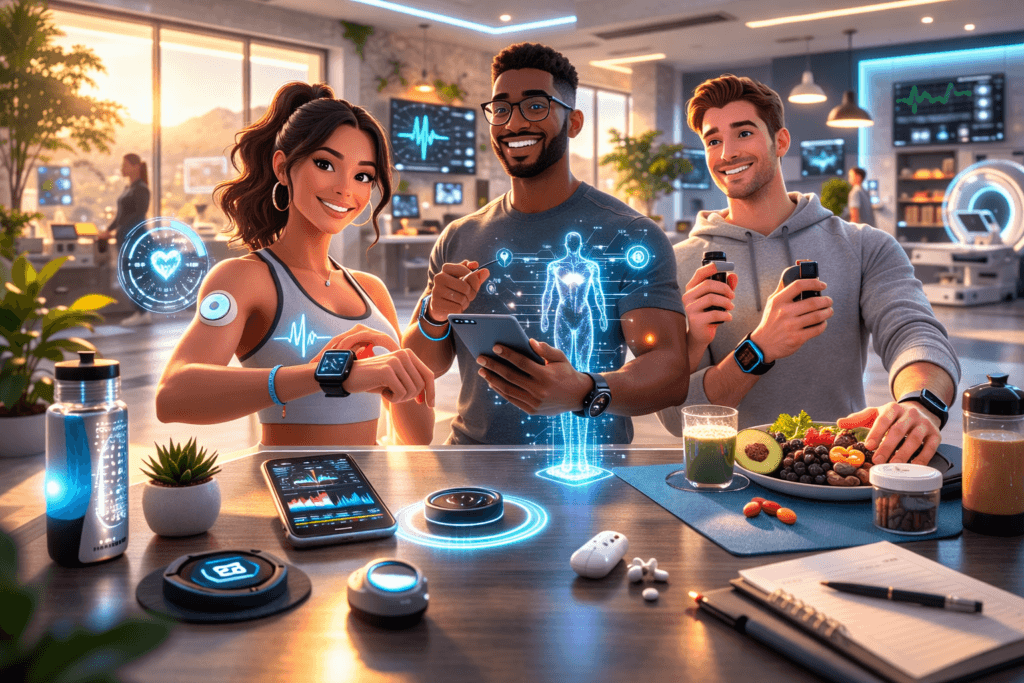
Biohacking is where wellness and technology stop being polite and start getting genuinely experimental. It covers people who test diets, use advanced monitoring tools, and experiment with everything from cold exposure to light therapy in the pursuit of more energy, sharper cognition, and a longer useful lifespan. Think of it as wellness operated like a personal science fair, with yourself as both the researcher and the subject.
Meet Connor, a forty-five-year-old software developer who wears a continuous glucose monitor despite not being diabetic. He fasts on a structured schedule, takes a carefully considered stack of nootropic supplements, and credits regular red-light therapy sessions with meaningfully improving his recovery. His friends describe him as half human, half laboratory, which he takes as a compliment. Connor insists he feels more capable now than he did a decade ago, and whether the improvements come from specific interventions or from the sustained attention he pays to his own biology, the results feel real to him.
Biohacking covers territory that ranges from well-researched to genuinely speculative, including cold plunges, infrared saunas, implantable chips, and peptide protocols that exist somewhere between cutting-edge medicine and hopeful experimentation. The appeal is the sense of agency: the idea that you can improve how your body operates through deliberate testing rather than waiting passively for a health system that rarely has time to treat prevention. The risk is that aggressive optimization can quietly crowd out the enjoyment of the life being optimized. When every meal, workout, and sleep session becomes a data point in an ongoing experiment, ordinary pleasure gets reclassified as a variable to be controlled rather than an experience to be had.
Despite its excesses, biohacking has pushed mainstream wellness conversations in genuinely useful directions. Intermittent fasting moved from fringe to widely researched. Glucose monitoring is spreading beyond diabetic populations into preventive health conversations. Even corporate wellness programs are beginning to engage with ideas that originated in self-experimentation communities. It is messy, sometimes eccentric, and occasionally ridiculous. It also reflects something real: people are done waiting passively to be fixed and increasingly interested in understanding how their biology actually works.
AI in Wellness: When the Algorithm Becomes Your Health Coach
Artificial intelligence has already shaped your playlists, your shopping recommendations, and your news feed. Now it is working on your health. From AI-driven fitness apps that design personalized training programs to mental health chatbots that check in between appointments, digital coaching has become a genuine part of how people manage their well-being. The promise is straightforward: smarter recommendations built around your specific patterns rather than generic population averages.
Consider Emily, a high school teacher who downloaded an AI-powered nutrition app expecting basic calorie tracking. Instead, it analyzed her food logs over several weeks, noticed she consistently skipped breakfast, and began suggesting quick morning meals based on her existing grocery habits and nutritional gaps. It flagged when her protein intake dipped and offered specific adjustments rather than generic reminders. Emily described the experience as the app knowing her patterns better than she tracked them herself, which was both genuinely useful and slightly unnerving.
AI in wellness has real potential, particularly for people managing chronic conditions where early pattern recognition can catch problems before they escalate into crises. The technology can process the kind of multi-variable data, steps combined with sleep combined with heart rate variability combined with nutrition, that no human coach could realistically hold in mind simultaneously. The legitimate questions involve data ownership, the accuracy of recommendations built on incomplete or biased training data, and the broader question of how much of our health decision-making we want delegated to systems whose logic is not always visible to us. Those are worth taking seriously even when the tools are working well.
The irony worth noting is that AI wellness tools often sound more attentive than overextended humans. They remind you to hydrate, rest, and breathe, while the humans around you are managing their own full plates. That dynamic is both useful and worth staying honest about. AI can reshape how people interact with their health in genuinely meaningful ways. It cannot replace the relational judgment that a good doctor or coach brings to a difficult health decision, and the gap between those two things matters.
More Than Just Numbers on a Screen
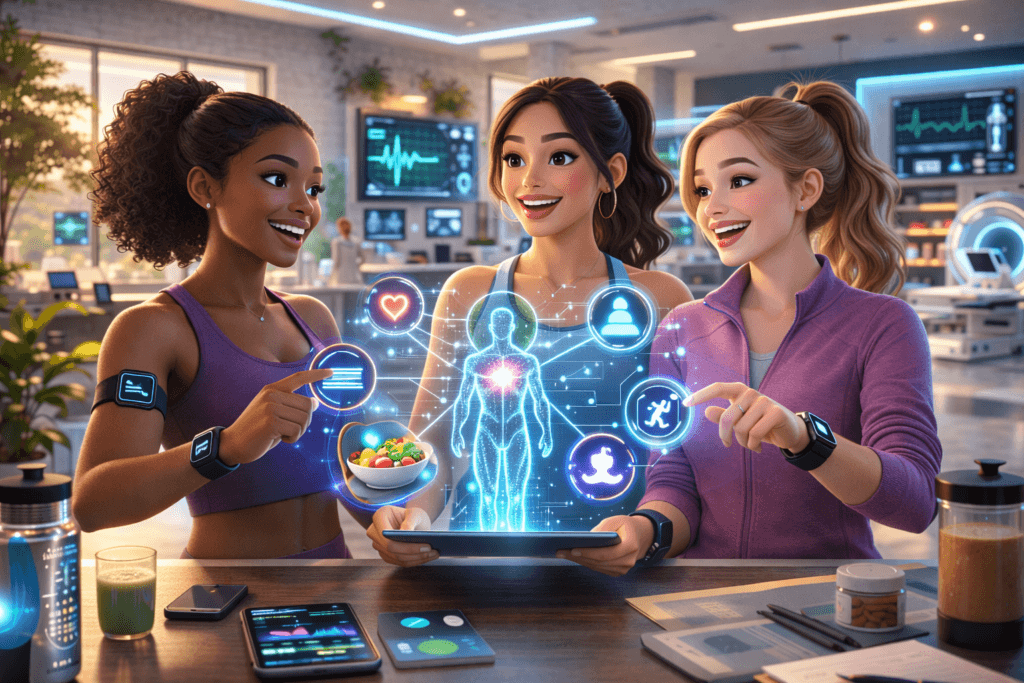
The rise of wellness technology is both genuinely revolutionary and occasionally ridiculous, and there is no reason to pretend it is only one of those things. Revolutionary because wearables, tracking apps, biohacking protocols, and AI coaching give people access to health insights that previous generations could not have imagined. Occasionally ridiculous because we are now capable of feeling stressed about data points for biological functions that humans managed for thousands of years without a dashboard.
Melissa with her smartwatch, Brandon with his step counts, Priya with her food logs, Connor with his glucose monitor, Emily with her AI nutrition coach: each of them found a different relationship with the same broad category of tools. Some found empowerment. Some found obsession. All of them found new ways of engaging with their own biology, and that engagement, when it stays honest and proportionate, is genuinely valuable.
The danger is mistaking the data for the destination. Health is not a resting heart rate score or a glucose graph. It is also how you feel at dinner with people you care about, how you recover from a hard week, and whether the way you are living actually feels like a life worth maintaining. Technology can guide the process. It cannot replace the parts of wellness that are too human to fit into a metric. The best version of wellness technology is a flashlight, not a leash: something that helps you see more clearly rather than something that controls where you are allowed to walk. Your body is not just a dashboard. It is a life, and life, fortunately, remains too complex to ever fit neatly into a graph.
Call to Action
Technology can tell you a lot about your body. What it cannot tell you is whether all eight areas of your well-being are actually working together or quietly pulling in different directions. That is what the Eight-Room Reset Guide was built for. It takes less than twenty minutes, it is free, and it gives you a clearer picture of your whole health than any single metric ever could.
Download the Eight-Room Reset Guide at Good Time To Shine and see what the full picture actually looks like.
Ronnie Canty | Good Time To Shine