Food used to be simple. You ate what was on the table, maybe complained about the broccoli, and moved on with your day. Now every bite feels like it has to pass a committee. Is it keto-approved? Will it spike your blood sugar? Does it contain anti-inflammatory compounds? Is it quietly destroying your gut bacteria? You cannot eat a sandwich anymore without a team of experts in your head debating whether the bread is basically poison. Welcome to the age of personalized nutrition, where everyone wants a diet crafted exactly for them, like a custom-built suit for the digestive system.
Look around at the people in your life. Someone is fasting until noon and insists it changed everything for them. Another is counting carbs like a mortal enemy is hiding in every bite. A third is spooning sauerkraut onto dinner and talking about probiotics with the energy of a new convert. It is entertaining, but it is also telling. People are not just searching for ways to lose weight anymore. They are searching for ways to feel genuinely better in their own bodies. The conversation has shifted from fitting into last year’s jeans to keeping the brain sharp and the body functional for decades to come. That is real progress, even when it looks like nutritional chaos.
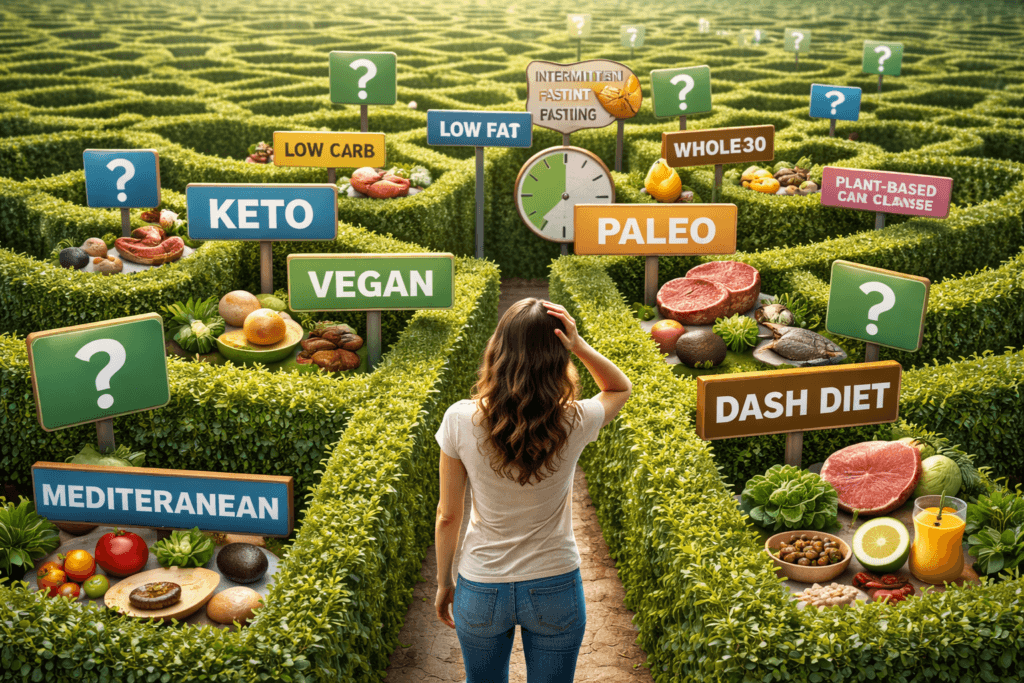
The appetite for personalization makes sense. Every body is different, which is why generic one-size-fits-all diets so reliably fail so many people. What works for a long-distance runner does not translate to someone sitting at a desk for eight hours. But the sheer volume of conflicting information makes it nearly impossible to know where to start. The diet world is loud, contradictory, and full of people who have found one thing that worked for them and are now certain it will work for everyone. Underneath all the noise is something worth paying attention to: people are finally beginning to treat food as more than just fuel. It is medicine, mood regulator, and sometimes the thing that quietly makes or breaks how you feel each day.
Keto and Low-Carb: Bacon, Butter, and the Gospel of Fat
Keto is not just a diet. It is a lifestyle that inspires fierce loyalty and an equal number of eye rolls. Believers celebrate the holy trinity of bacon, avocados, and butter while skeptics question whether living primarily on meat and cheese is anyone’s idea of sustainable long-term health. Despite the debate, keto exploded in popularity because it delivered what people most wanted: fast, visible results and a renewed sense of control over food.
Dan is a forty-five-year-old dad who had tried every diet trend since Atkins and was half-skeptical when he started keto. The first week was rough. Headaches, fatigue, the collection of miserable symptoms the internet cheerfully calls “keto flu.” By week two, things shifted. The pounds started dropping, his afternoon energy improved, and he became the guy at work explaining to coworkers why their bagels were the enemy. For him, keto was the framework that finally clicked. For his wife, it was mostly the overwhelming smell of sausage at six in the morning.
Keto works for some people because forcing the body into ketosis, where it burns fat instead of carbohydrates as its primary fuel, produces real metabolic changes. The challenge is that sustainability becomes the central question quickly. Avoiding carbohydrates in a world built around bread, pasta, and social eating means constantly saying no to things that feel normal. Going to a birthday party and refusing cake for the fourth time in a row starts to feel less like a health choice and more like a social experiment. That is where most people eventually hit the wall. The diet works right up until real life reasserts itself with a plate of pasta.
What keto genuinely accomplished, regardless of whether you follow it, is shifting the cultural conversation about fat. The low-fat obsession of the 1990s did enormous damage to how people understood food, and keto helped push the pendulum toward a more nuanced understanding of what dietary fat actually does in the body. Sometimes the loudest, most extreme conversation is the one that makes space for better ones to follow.
Fasting: Skipping Meals with Fancy Branding
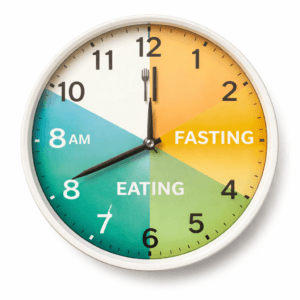
Intermittent fasting sounds rigorous and scientific, but at its core it is skipping breakfast dressed up in a lab coat and given a proper acronym. The concept is straightforward: limit eating to specific windows of the day, allow the body a sustained rest from digestion, and let fat-burning processes that tend to get interrupted by constant snacking do their work. It is not a new idea at all. Religions have used fasting intentionally for centuries. In modern wellness culture it became the hack everyone swears unlocked something.
Leila is a twenty-nine-year-old graphic designer who used to start her mornings with bagels and coffee that left her jittery and crashing by mid-morning. She tried limiting her eating to a noon-to-eight window and spent the first week irritable in a way her coworkers definitely noticed. By week three, she reported more sustained energy, less mental fog, and a different relationship with food overall. Skipping breakfast stopped feeling like deprivation and started feeling like clarity. Her day was no longer structured around constant eating and the decisions that came with it.
Critics of fasting make a fair point that the mechanism may simply be reduced calorie intake rather than anything magical about the timing itself. That may be true. But the appeal of fasting is not purely biological. It is the simplicity. No measuring portions, no complicated meal prep, no tracking macros across seven food categories. Just a clock telling you when to eat. In a world where every decision feels like it requires deliberation, a boundary that simple has real psychological value. The downside, as Leila can confirm, is social friction. Try explaining a fasting window to someone who wants to take you to breakfast. You will sound like you joined something.
Gut Health: The Billion Bacteria Inside You
There was a time when discussing your intestines at a dinner party was considered poor form. That time is apparently over. Gut health has become the wellness conversation of the decade, promising improvements in digestion, immunity, mood, and nearly everything in between. The microbiome, the complex ecosystem of bacteria living in your digestive tract, turned out to be far more influential than anyone expected.
Miguel battled unpredictable stomach issues for years. Doctors prescribed medications that helped partially but never solved the underlying problem. He stumbled into the gut health space out of frustration, not conviction, and started eating yogurt, adding fermented foods, increasing fiber, and cutting back on the processed food that had been a daily fixture. Gradually, his digestion stabilized. He slept better. He noticed his anxiety was quieter. Whether every change can be attributed to the microbiome or simply to eating better food in general is hard to say with certainty, but the improvement was real and sustained.
The science linking gut bacteria to brain function and mood is genuinely interesting and still developing. What is already clear is that the marketing machine arrived long before the research did. Products that have nothing to do with gut health are now labeled “gut-friendly.” Candy bars have found ways to claim probiotic benefits. The term has been stretched so far that it risks losing its meaning entirely. The actual principle, eating more whole food, fiber, fermented products, and less highly processed food, is not complicated. But simplicity does not sell supplements, which is why gut health has become an entire retail category built on repackaging old advice in newer language.
Anti-Inflammatory and Micronutrient Profiling: The Detective Work of Diets
Inflammation in the context of injury is straightforward. In the context of nutrition, it has become one of the most loaded words in wellness. Chronic low-grade inflammation is linked in research to fatigue, joint pain, cardiovascular disease, and several other conditions that have become more common as processed food consumption increased. Anti-inflammatory diets built around fatty fish, leafy greens, berries, olive oil, and spices like turmeric represent a real and research-supported approach to eating, even if the marketing around them sometimes oversells the magic.
Erin, a mother of three, was chronically tired and achy in a way that felt disproportionate to her age. She had tried several diets without lasting results. A physician suggested she focus on anti-inflammatory foods and reduce her intake of processed items she had been treating as convenient staples. She made the changes skeptically. A few months later, she had noticeably more energy and less of the joint stiffness that had become her normal. It was not dramatic. It was sustainable, which turned out to be more valuable.
Micronutrient profiling goes a level deeper, using bloodwork or genetic testing to identify specific deficiencies and build dietary and supplement recommendations around them. The idea is compelling: instead of guessing what your body needs, measure it and act precisely. The limitation is cost and access. These services are expensive, and the populations who most need nutritional support are often the least able to afford personalized testing. There is also something worth noting in the fact that the foods most consistently associated with health outcomes across populations, vegetables, legumes, whole grains, and fruit, are some of the most affordable foods available. The problem is rarely the absence of precision. It is the absence of habit.
Chasing the Perfect Plate
Nutrition today is one long, loud experiment, and everyone is simultaneously the researcher and the subject. Keto, fasting, gut health, anti-inflammatory diets, micronutrient profiling: each one reflects the same underlying search for a way of eating that makes life feel better, not just shorter or lighter. People want energy that holds through the afternoon, a mind that stays clear, and a body that does not constantly object to the demands being placed on it. Food became the place where those ambitions land.
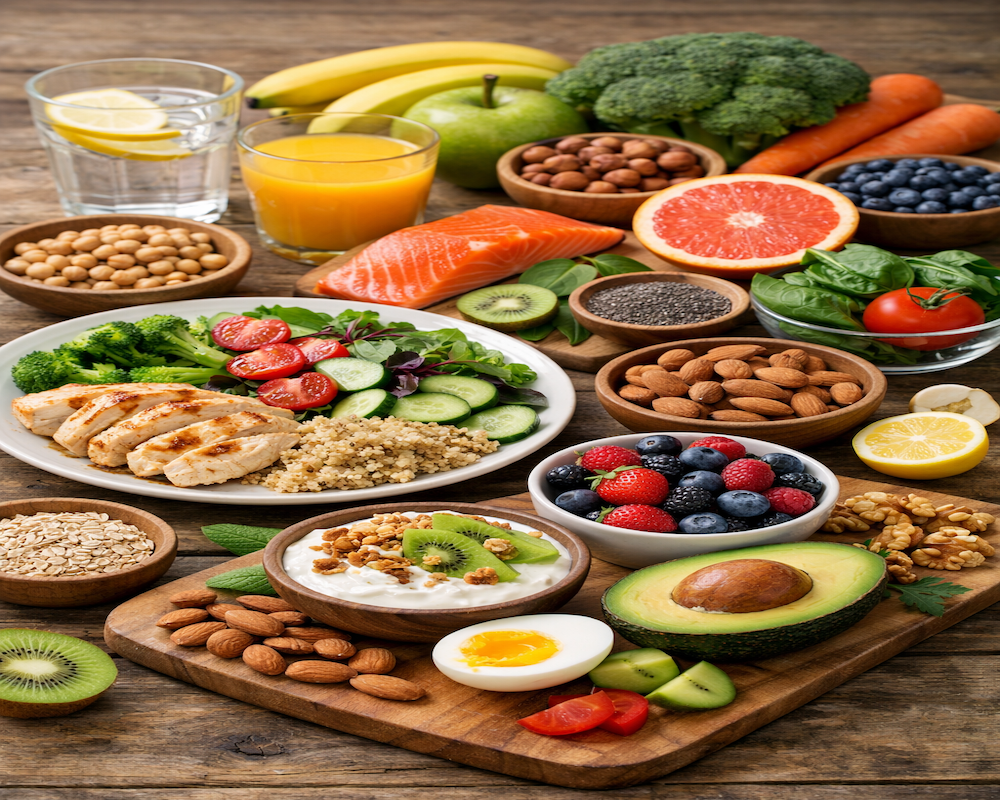
The honest answer to most nutrition questions is that individual variation is real, no single approach works for everyone, and the fundamentals that have the most consistent research behind them are also the least exciting to sell. More plants, fewer processed foods, adequate protein, appropriate calories, and actually eating at regular intervals will outperform most trending diets for most people most of the time. The interesting work in personalized nutrition is in understanding which variations on that baseline matter for a given individual, not in finding a shortcut around it.
What is genuinely hopeful about this moment is that people are paying attention to what they eat in a way that previous generations largely did not. The conversation is noisier than it needs to be, and the industry profits from that noise, but underneath it is a real shift toward treating food as consequential rather than incidental. Your body has been sending you signals about what it needs for your entire life. Personalized nutrition, at its best, is just learning to listen more carefully.
Call to Action
What you eat shapes how you feel, how you think, and how much energy you bring to every other area of life. It is one of the eight rooms in the Eight-Room Reset Guide, and it is rarely operating in isolation from the others.
If you are ready to take an honest look at where your habits are working and where they are quietly costing you, the guide is a good place to start. It is free, it is practical, and it does not tell you what to fix. It helps you see what is actually asking for attention.
Download the Eight-Room Reset Guide at Good Time To Shine and take one clear-eyed look at the full picture.
Ronnie Canty writes about wellness not as a destination but as a daily decision made under real conditions. Through Good Time To Shine, he explores all eight dimensions of a life well lived, because the person building something hard deserves to feel good doing it. The joy is not the reward. It is the point.