

The Emergency Nobody Calls In
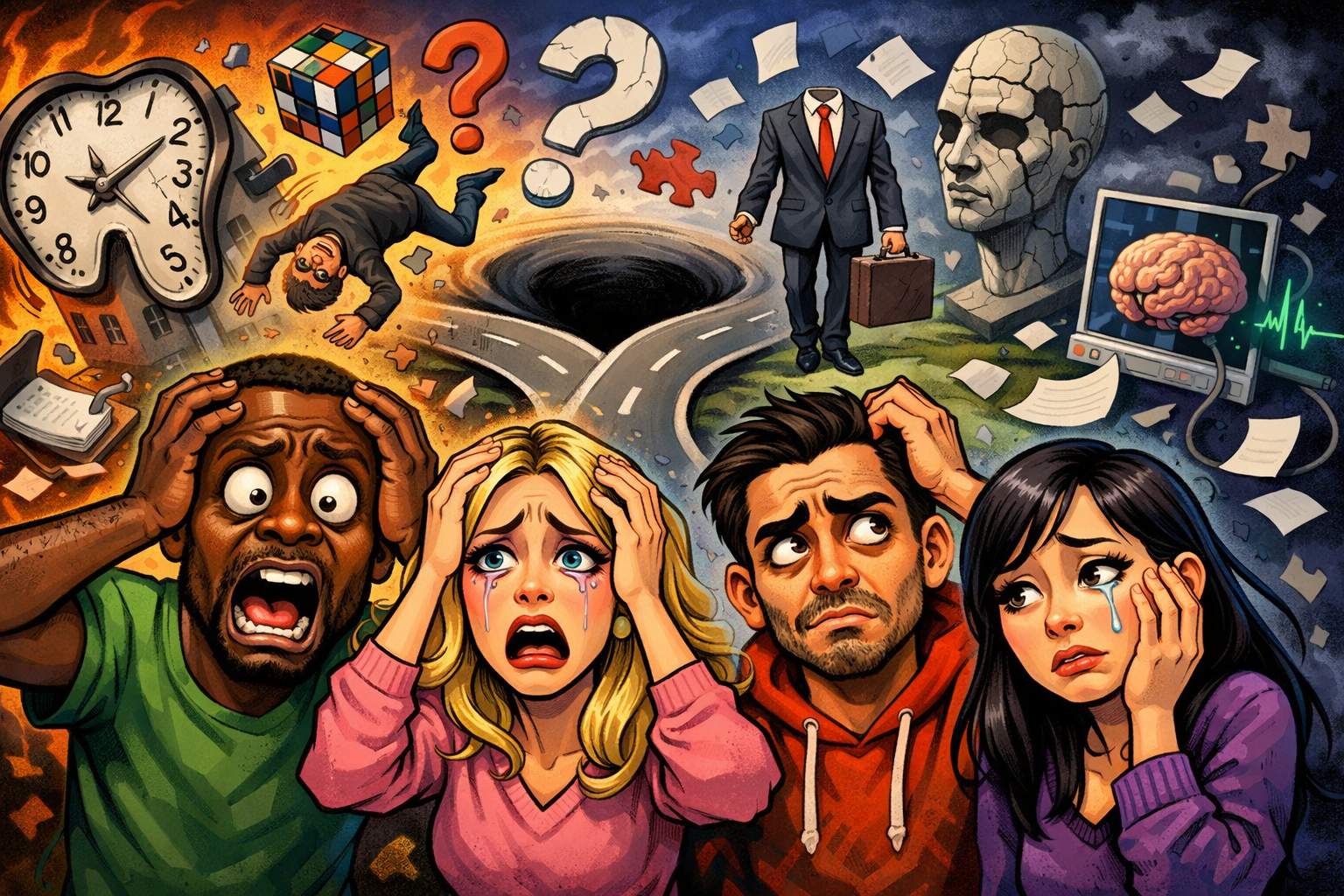
Anxiety does not look like an emergency. There are no sirens, no flashing lights, no dramatic collapses in the middle of the street. Instead it looks like a normal Tuesday. It looks like answering emails while your chest feels tight. It looks like smiling through a meeting while your mind quietly runs through ten worst-case scenarios simultaneously. That is exactly what makes this crisis so difficult to address. It hides in plain sight, disguised as ordinary life, until ordinary life starts to feel like something you have to survive rather than actually live.
We have normalized feeling on edge. We call it stress. We call it hustle. We call it staying informed. But when an entire generation feels persistently restless, tense, and unable to fully exhale, we are not looking at a personality trend or a collective character flaw. We are looking at a health issue that is quietly shaping how people work, relate to each other, and move through their days. Anxiety has become the background noise of modern life, running so consistently that most people have stopped noticing it is there.
We Renamed It So We Would Not Have to Face It
One reason anxiety has spread so widely is that we learned to soften its name. Saying “I am just stressed” makes it feel smaller and more manageable than it actually is. Stress sounds productive. Stress sounds like someone who cares enough to feel pressure. Anxiety sounds fragile, and fragile is a label most people are not willing to accept about themselves, so they reach for the softer word and move on without addressing what is actually happening.
But stress and anxiety operate differently. Stress usually has a clear source and a recognizable endpoint. You study for the test, take it, and the pressure drops. You finish the project, submit it, and your body resets. Anxiety does not follow that clean pattern. It lingers long after the event that triggered it has passed. Sometimes it arrives when nothing obvious is wrong at all. You can be on vacation and still feel it running underneath the enjoyment. You can be financially stable and still lie awake worrying about losing everything. You can be surrounded by people who love you and still fear that you are one mistake away from rejection. That is not stress responding to a situation. That is a nervous system that has lost the ability to register safety even when safety is present.
When we refuse to call anxiety by its name, we delay doing anything meaningful about it. And delay has a cost that accumulates quietly over time.
Your Brain Is Trying to Protect You
Anxiety is not a character flaw or a sign of weakness. It is a biological response doing exactly what it was designed to do, just in an environment it was not designed for. Your brain is wired for survival, not comfort. Its primary job is to scan the environment for threats and respond quickly when something feels wrong. When it senses danger, it activates the fight-or-flight system: heart rate accelerates, muscles tighten, breathing shifts, and blood moves toward the systems that help you react fast. In a genuine emergency, this response can save your life.
The problem is that your brain does not clearly distinguish between physical danger and social or psychological threat. A hostile email can trigger the same internal alarm as a physical confrontation. Job uncertainty registers in the nervous system with the urgency of a survival threat. Rejection activates responses that were originally designed to prevent exile from a group that you depended on for survival. So the alarm fires. And in today’s environment, with its continuous stream of demands, comparisons, and potential failures, it rarely fully turns off. The system designed to protect you in short, acute bursts ends up running as a background process that was never meant to operate at that frequency.
We Built a World That Keeps the Alarm Running
Modern life is not neutral for the nervous system, and being honest about that matters. We live with constant information, constant comparison, and constant access. News cycles run without interruption. Phones deliver updates across the entire day. Social media feeds provide a continuous stream of evidence about what everyone else appears to be doing, achieving, and enjoying while you are sitting with your current reality. That steady input keeps the brain scanning continuously, asking whether each new piece of information represents a threat, a problem, or proof that you are falling behind in some unspoken competition.
Work culture adds significant pressure on top of that baseline. Being perpetually busy is worn as a badge of credibility in most professional environments. Rest can feel lazy when the people around you are still working. Slowing down can feel genuinely risky when your sense of value is tied to your output. When productivity becomes the primary way you measure your own worth, the stakes attached to any given failure feel enormous rather than proportionate. This environment does not create anxiety from nothing, but it creates ideal conditions for anxiety that already exists to grow deeper roots and become harder to uproot.

The High-Functioning Mask
One reason anxiety has become so widespread without receiving proportionate attention is that it hides behind competence. Many of the most anxious people are also high performers. They meet deadlines consistently. They show up early and prepared. They double-check details because missing something feels catastrophic rather than merely inconvenient. From the outside, they look fine. From the outside, they often look impressive.
Inside, the experience is frequently something else entirely. There may be racing thoughts before every presentation that looks effortless to everyone in the room. There may be sleepless nights before decisions that appear to be handled with calm confidence. There may be a persistent, low-level conviction that one significant mistake could unravel everything that has been carefully built. Society tends to reward this hyperalert state by labeling it as driven, reliable, and high-achieving. But when success is consistently powered by fear rather than genuine engagement, it comes with a cost that does not show up on a performance review. Chronic tension wears down both the body and the capacity for the kind of clear thinking that performance actually requires. The fact that someone is succeeding does not mean they are well.
The Physical Toll That Gets Ignored
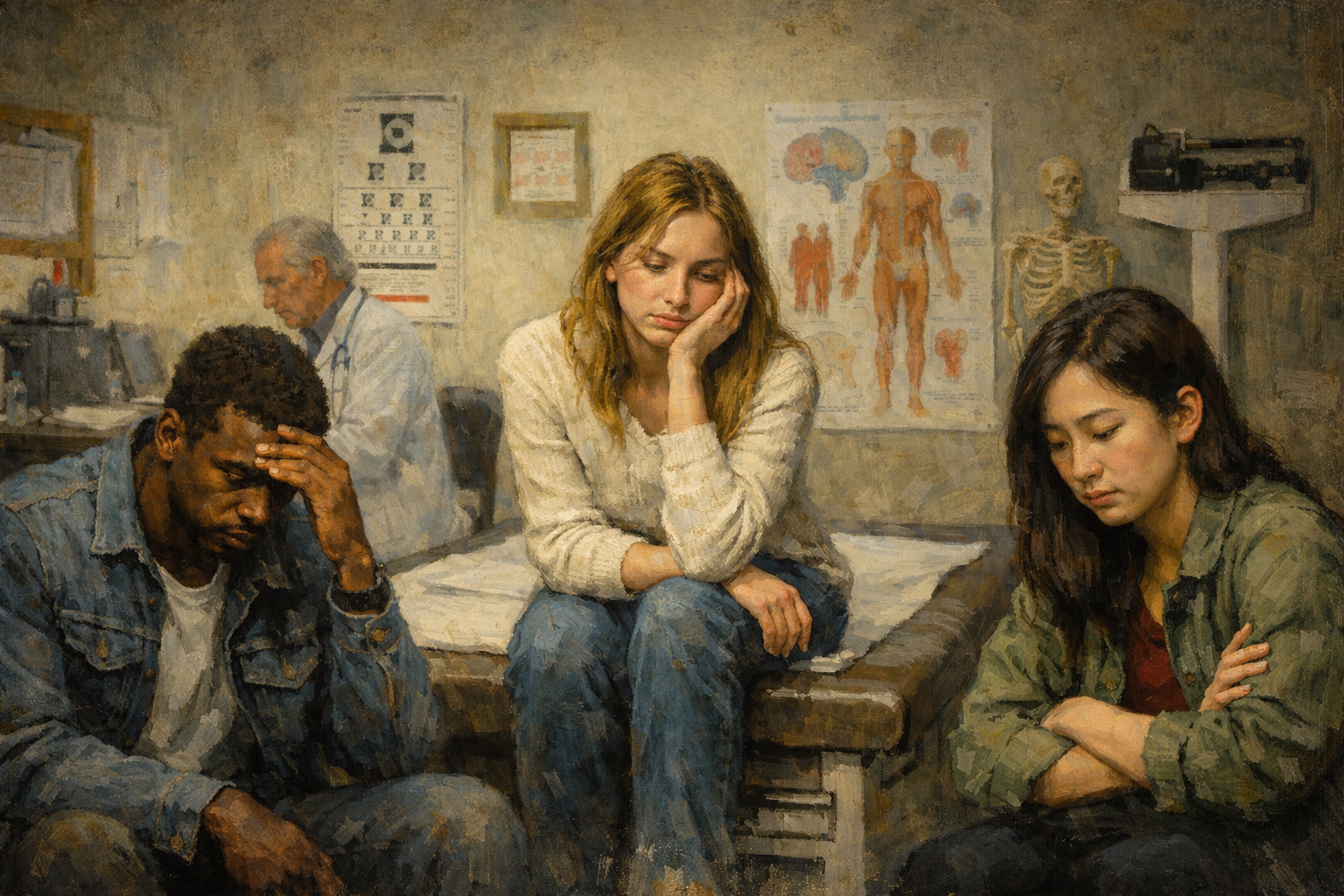
Anxiety is not limited to mental chatter. It registers in the body in ways that are measurable and cumulative. Chronic headaches, persistent shoulder tension, digestive irregularities, fatigue that does not resolve with sleep, and difficulty staying asleep are among the most common physical companions of sustained anxiety. Many people cycle through medical appointments looking for answers, receive normal test results, and walk away without a clear explanation for why they feel the way they do. Normal tests do not always mean a calm or well-regulated nervous system.
When stress hormones remain elevated over extended periods, the body’s ability to rest and repair is consistently compromised. Digestion operates less efficiently. Sleep becomes lighter and less restorative. Muscles stay partially braced in a low-level preparatory state that was designed for short-term use. Over time, that sustained alertness increases the risk of other health problems, not as a dramatic event but as a gradual erosion. The body keeps an accurate record of what it has been asked to carry, even when the mind has developed effective strategies for pushing through. Ignoring anxiety does not make it disappear. It often just redirects the way it eventually surfaces.
The Generation Growing Up Inside It
If anxiety were limited to overworked adults, that would be concerning enough. But younger generations are showing clear signs of strain as well, and the trajectory is worth taking seriously. Many children are growing up in environments where performance pressure begins early and covers multiple dimensions simultaneously: academic results, athletic achievement, and social image all carry weight before young people have developed the internal resources to manage that load without cost.
Add digital exposure to global crises, continuous social comparison, and constant commentary on everything happening everywhere, and it becomes clear that young nervous systems are operating under sustained pressure that previous generations did not face at the same developmental stages. A child complaining of stomach pain before school may not be avoiding a subject they dislike. They may be experiencing an overwhelm that they do not have language for yet. A teenager withdrawing from family may not be going through a typical developmental phase. They may be genuinely exhausted by the constant pressure to measure up across too many fronts at once. When anxiety goes unnamed in young people, it goes unaddressed, and the habits that form around unaddressed anxiety tend to persist into adulthood. This is not about labeling every worried thought as a clinical disorder. It is about recognizing patterns that are becoming too consistent and too widespread to keep dismissing.

Why Quick Fixes Fall Short
There is no shortage of advice for managing anxiety. Breathe deeply. Practice gratitude. Light a candle. Take a bath. These suggestions are not without value. They can help regulate the nervous system in small, specific moments, and small moments matter. But they do not solve structural problems, and most sustained anxiety is structural rather than situational.
You cannot breathe your way out of a life that genuinely never slows down. You cannot journal your way out of a professional environment that keeps people in a constant state of urgency. You cannot reframe your way to calm when your nervous system is structurally overstimulated by conditions that do not change between one breathing exercise and the next. Real and lasting change often requires harder conversations with yourself and sometimes with others. It may mean establishing boundaries that feel uncomfortable before they feel natural. It may mean deliberately reducing the volume of constant news and social comparison that keeps the alarm system running at high frequency. For some people, it means therapy. For others, it means medication. For many, it means honestly reassessing which goals were never truly theirs to begin with and what it would cost to keep chasing them.
What If Anxiety Is a Signal Worth Reading?
Here is a perspective that does not get nearly enough attention: what if anxiety is not simply a malfunction to be eliminated, but a signal pointing toward something that genuinely needs attention? Signals have a purpose. Pain signals injury. Hunger signals a real need. Anxiety may be signaling overload, misalignment between your life and your actual values, or needs that have been deferred so consistently they have started expressing themselves through the nervous system instead.
Rather than asking only how to eliminate the feeling as quickly as possible, it becomes worth asking what it might be pointing toward. Is your current schedule genuinely sustainable or just something you have normalized? Are you consistently saying yes to things that require a no? Are you organizing your life around external approval at the ongoing expense of internal peace? This approach does not romanticize anxiety or suggest that simply sitting with it is sufficient. It does not minimize how genuinely miserable sustained anxiety feels to live inside. But it removes some of the shame, and shame removal alone measurably lowers the intensity of anxious thinking in many people. If anxiety is a signal, then responding to it thoughtfully becomes an act of self-awareness rather than weakness. That reframe matters more than it might initially appear.
A Cultural Problem Requires More Than Personal Solutions
When millions of people share the same struggle, it is not purely an individual problem requiring only individual solutions. It is cultural, and cultural problems require responses at multiple levels simultaneously. Workplaces may need to genuinely rethink what sustainable performance expectations look like rather than treating burnout as an acceptable cost of ambition. Schools may need to reconsider how success is defined and measured when current metrics are producing measurable distress in younger and younger populations. Families may need honest conversations about what achievement actually means and what it is costing the people working toward it.
Personal resilience matters. Individual responsibility is real and important. But no amount of personal strength fully compensates for an environment that keeps triggering the alarm system at a frequency the human nervous system was not built to sustain indefinitely. The practical case for calmer environments is straightforward: people with regulated nervous systems think more clearly, make better decisions, maintain healthier relationships, and build more sustainable results over time. This is not idealism dressed up as policy. It is a recognition that chronic collective anxiety is expensive in every direction it gets measured.

The Opportunity Inside the Crisis
The fact that anxiety is this widespread is troubling in the ways that have been covered here. It is also revealing in ways worth acknowledging. It shows clearly where pressure points exist in the systems people move through daily. It shows where institutions have prioritized output over the humans producing it. It shows how much people are carrying quietly while maintaining the appearance that everything is manageable. There is growing openness about mental health in ways that represent genuine progress: therapy is less stigmatized than it was a decade ago, honest conversations are happening in spaces that used to require total composure at all times, and the language for naming what people experience is becoming more widely available and more widely accepted.
But awareness without structural response changes relatively little for the people living inside the problem right now. The quiet emergency does not require sirens to be real. It requires honest attention, meaningful response, and the willingness to treat the well-being of an entire generation as something worth actually building systems around. That may be the most important work this moment is asking for.
Call to Action
Anxiety rarely announces itself clearly. It tends to settle in as the background hum of daily life until the hum becomes something harder to ignore. If this post put words to something you have been carrying, the Eight-Room Reset Guide includes emotional well-being as one of its eight areas and was built to help you see where pressure is quietly accumulating before it demands your full attention.
It is free, it takes less than twenty minutes, and it does not require you to have everything figured out before you start.
Download the Eight-Room Reset Guide at Good Time To Shine and take one honest look at the full picture.
Ronnie Canty | Good Time To Shine