
The Modern Obsession With Outrunning Time
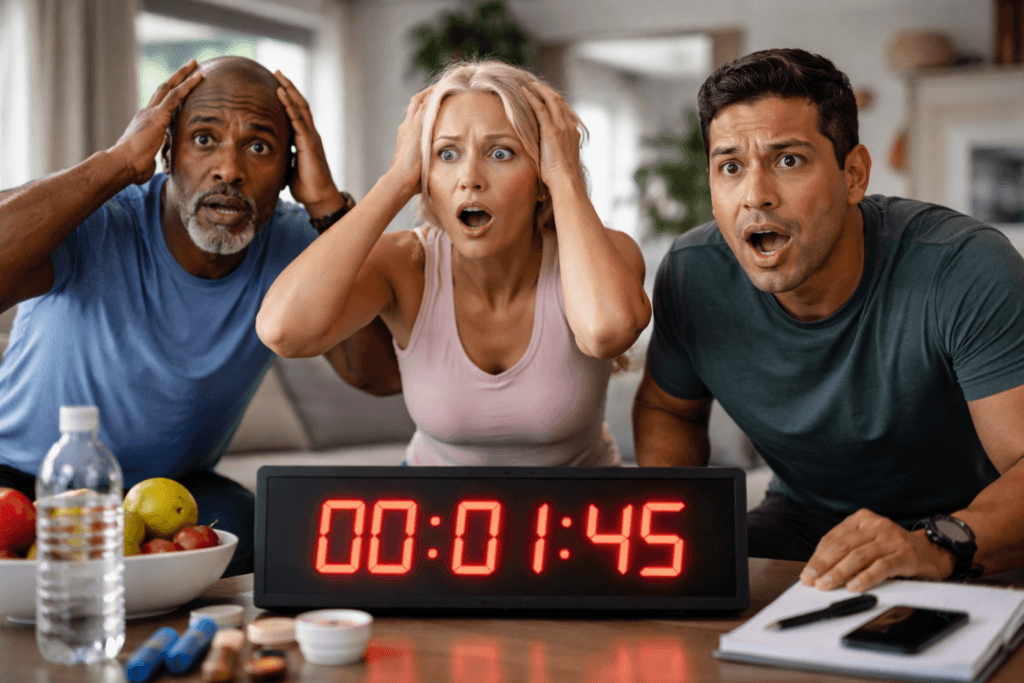
Aging used to be something people whispered about, like an embarrassing secret best kept off the table at family dinners. Now it is a billion-dollar obsession. Everywhere you look, someone is promising the secret to youth: creams, supplements, biohacks, meditation apps, even cryotherapy chambers that look like they belong in a science fiction film. The truth is that everyone wants the same thing. More years, but not just for sitting in a chair staring out the window. People want years with energy, flexibility, and a brain that still remembers where the car keys are. Longevity is not about immortality. It is about staying functional while the candles on your birthday cake get crowded.
Consider Eleanor, who turned sixty-two last summer. Her daughter begged her to slow down, but Eleanor was too busy hiking mountains, learning Spanish online, and taking pickleball way too seriously. She does not want to just live longer. She wants to keep living fully. That drive is what fuels the anti-aging industry. People like Eleanor do not settle for graceful decline. They want to fight the slide, and they are willing to spend real money doing it. The fascination with healthy aging is not purely vanity, though there is certainly some of that. It is also fear. Nobody wants to spend their last decades in a fog, dependent on pills and overwhelmed by doctor visits.
So people chase cellular health, supplements, and biohacks. Some of it is grounded in science. Some is sophisticated snake oil. But all of it speaks to the same underlying longing: to squeeze the most out of this strange, temporary ride called life. That longing is worth taking seriously, which means separating what actually works from what just sells well.
Cellular Health: The Battle Inside You
When most people think about aging, they picture wrinkles or gray hair. But the real action happens at the cellular level, long before anything shows up in the mirror. Your body is a city of trillions of cells, and like any city, things start breaking down with time. DNA accumulates damage. Repair systems slow down. The tiny power plants inside your cells, called mitochondria, lose their efficiency. Scientists increasingly agree that this is where aging actually begins, deep inside, years before it becomes visible on the outside.
Take David, a forty-eight-year-old tech consultant who started researching cellular aging after noticing his energy crashed every afternoon by three o’clock. He learned about oxidative stress, telomere shortening, and mitochondrial decline. The terminology sounds alarming, but the core idea is simple: the inside of his body was fraying faster than it needed to. Instead of panicking, David made a series of small changes. More vegetables, less processed food. Daily walks. Consistent sleep. Within a few months, he felt less like a phone perpetually at twelve percent battery and more like someone who still had hours left on the charge.
The science of cellular health is still developing, and the supplement industry has not waited for the research to catch up. Antioxidants, NAD+ boosters, and various lifestyle protocols all claim to support cellular function. The honest answer is that some help more than others, and none of them replace the fundamentals. Exercise remains the most powerful and well-documented tool for supporting mitochondrial health. Nutrition, sleep, and stress management follow closely. The everyday habits that already feel obvious are often the ones the industry least wants you to focus on, because there is no profit margin in going to bed on time.
Supplements: Pills, Powders, and the Hope in a Bottle
Walk into any health store and it looks like a candy shop for adults determined to outrun their birthdays. Shelves stacked with powders, pills, oils, and drinks, each promising to extend life or sharpen the mind. Some are supported by real research. Others are marketing dressed up in scientific language. The challenge is telling them apart without spending a fortune on the wrong ones.
Meet Carol, who spends more on supplements each month than most people spend on groceries. She starts her morning with vitamin D, omega-3s, and collagen stirred into her coffee. After lunch it is turmeric, resveratrol, and magnesium. Before bed, melatonin. Her kitchen counter resembles a pharmacy. Does all of it work? That is genuinely hard to say. Some studies point to real benefits for specific compounds in specific populations. Others find effects that barely clear the threshold of meaningful. Carol insists she feels better, and subjective experience counts for something, even when it is hard to separate from placebo.
Certain supplements do fill real gaps. Vitamin B12 is critical for people eating plant-based diets. Vitamin D is commonly deficient in populations with limited sun exposure. Omega-3s have solid backing for heart and cognitive health. But no capsule can compensate for a lifestyle built on poor sleep, chronic stress, and processed food. Taking resveratrol while eating junk and never moving your body is the nutritional equivalent of spraying air freshener in a room that needs deep cleaning. Supplements are tools, not replacements. They work best in a life that is already doing most of the right things. The booming market reflects how desperate people are for a sense of control over something as relentless as time. That impulse is understandable. The industry has simply learned to profit from it more effectively than it has earned it.

Biohacking: The DIY Science of Aging in Reverse
Biohacking sounds like something invented for a Netflix thriller, but it describes a real and growing movement: people experimenting on themselves in pursuit of better health and slower aging. The approaches range from sensible, like cold exposure and intermittent fasting, to genuinely extreme, like young-blood transfusions or subcutaneous implants. The goal across all of it is the same. Make the body perform younger than its chronological age.
Greg, a fifty-five-year-old entrepreneur, treats his body like a research project. He tracks his continuous glucose levels, experiments with fasting windows, and wears a biometric monitor around the clock. He uses red-light therapy, practices daily breath-work, and has worked through a long list of nootropic supplements. His friends think he is eccentric. Greg says he feels a decade younger than he did five years ago. Whether the science fully supports every choice he makes is debatable. The sense of agency he gets from the process is not.
Biohacking appeals to people who hate passivity. Rather than watching decline happen, they test variables and adjust. Some methods carry real scientific support. Fasting, for example, has meaningful research behind its effects on metabolic health and cellular repair. Others, like certain frequency-based therapies, remain far less proven. The risk in the biohacking mindset is turning life into a permanent optimization project, so focused on metrics and interventions that you stop being present for the life you are supposedly extending. The best version of biohacking uses curiosity as a tool and common sense as a brake, not the other way around.
Telomeres: The Tiny Timekeepers of Life
Inside every cell, your DNA is coiled and capped at each end with protective structures called telomeres. Every time a cell divides, those caps shorten slightly. When they wear down too far, the cell stops dividing or begins to malfunction. Shorter telomeres are associated with aging and increased disease risk. Scientists have described them as a kind of biological clock running inside every cell in your body.
Lila, a wellness coach, discovered the telomere research and found it genuinely motivating. The idea that her daily habits might be either protecting or eroding those caps gave abstract health choices a concrete frame. She built her routine around the lifestyle factors research links to slower telomere shortening: daily movement, stress management, consistent sleep, and a diet heavy in vegetables and light in processed food. Whether her telomeres are measurably longer as a result is something she cannot easily verify. But the life she built around that goal is healthier in every dimension she can measure.
Telomeres matter because they make aging feel less abstract and more addressable. But it is worth keeping the bigger picture in mind. Aging is shaped by dozens of interacting factors, and telomere length is one piece of a complex puzzle. The same habits that support telomere health, regular exercise, quality sleep, whole foods, and lower chronic stress, also support nearly every other marker of healthy aging. The telomere story is ultimately another argument for the habits that were never glamorous enough to trend, but have always been the real answer.
Living Longer Isn’t the Same as Living Better
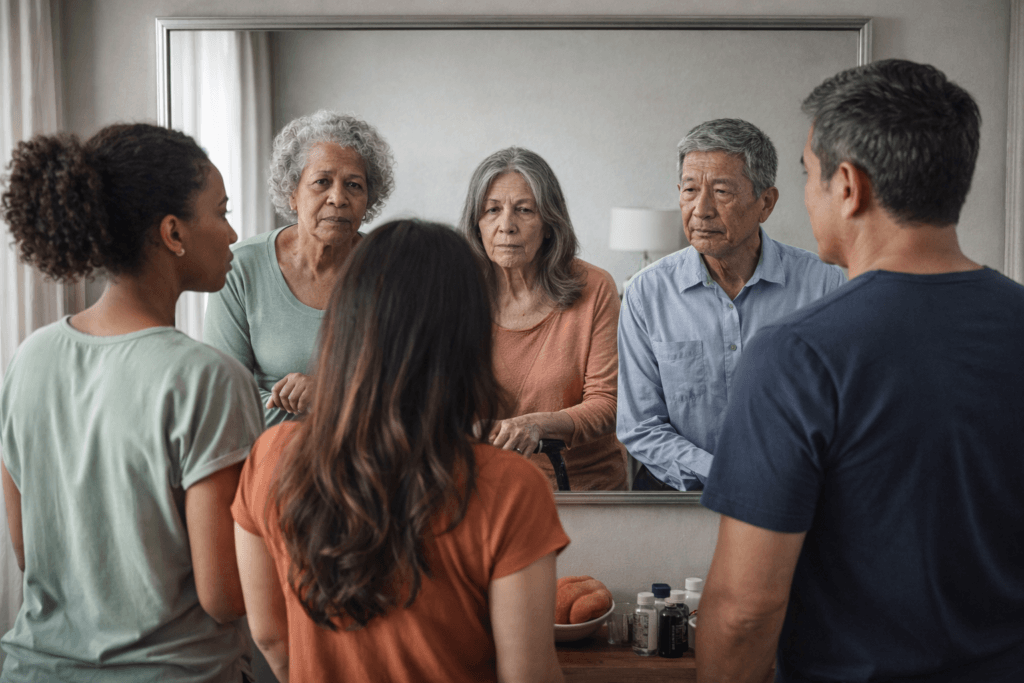
The pursuit of longevity is not really about escaping death. It is about stretching the good years, the ones where your body moves without protest and your mind stays sharp enough to enjoy what you have built. Cellular health, supplements, biohacking, and telomere science are all pieces of the puzzle. Some are grounded in strong evidence. Others are grounded more in hope. But all of them circle the same fundamental question: how do we make the years we have actually count?
Eleanor hiking at sixty-two, David reclaiming his afternoon energy, Carol building her supplement stack, Greg running his self-experiments, Lila designing a telomere-friendly life: their approaches are different, but the drive underneath is identical. None of them will live forever. All of them are choosing to be active participants in how they age rather than passive observers. That shift in posture, from patient to agent, may matter as much as any specific intervention. Longevity is not a finish line. It is a mindset that treats each decade as worth fighting for, not something to simply endure.
Call to Action
Healthy aging is not a single decision. It is a pattern of smaller ones, repeated long enough to compound into something meaningful. The Eight-Room Reset Guide was designed with exactly that in mind. It maps eight connected areas of well-being, including physical vitality, and helps you see where your current habits are serving you and where they are quietly costing you. No dramatic overhaul required. Just an honest look at where you actually are.
Download the free guide at Good Time To Shine and see what your next best step looks like.
Ronnie Canty | Good Time To Shine