


Your Body Is Paying Attention Even When You’re Not
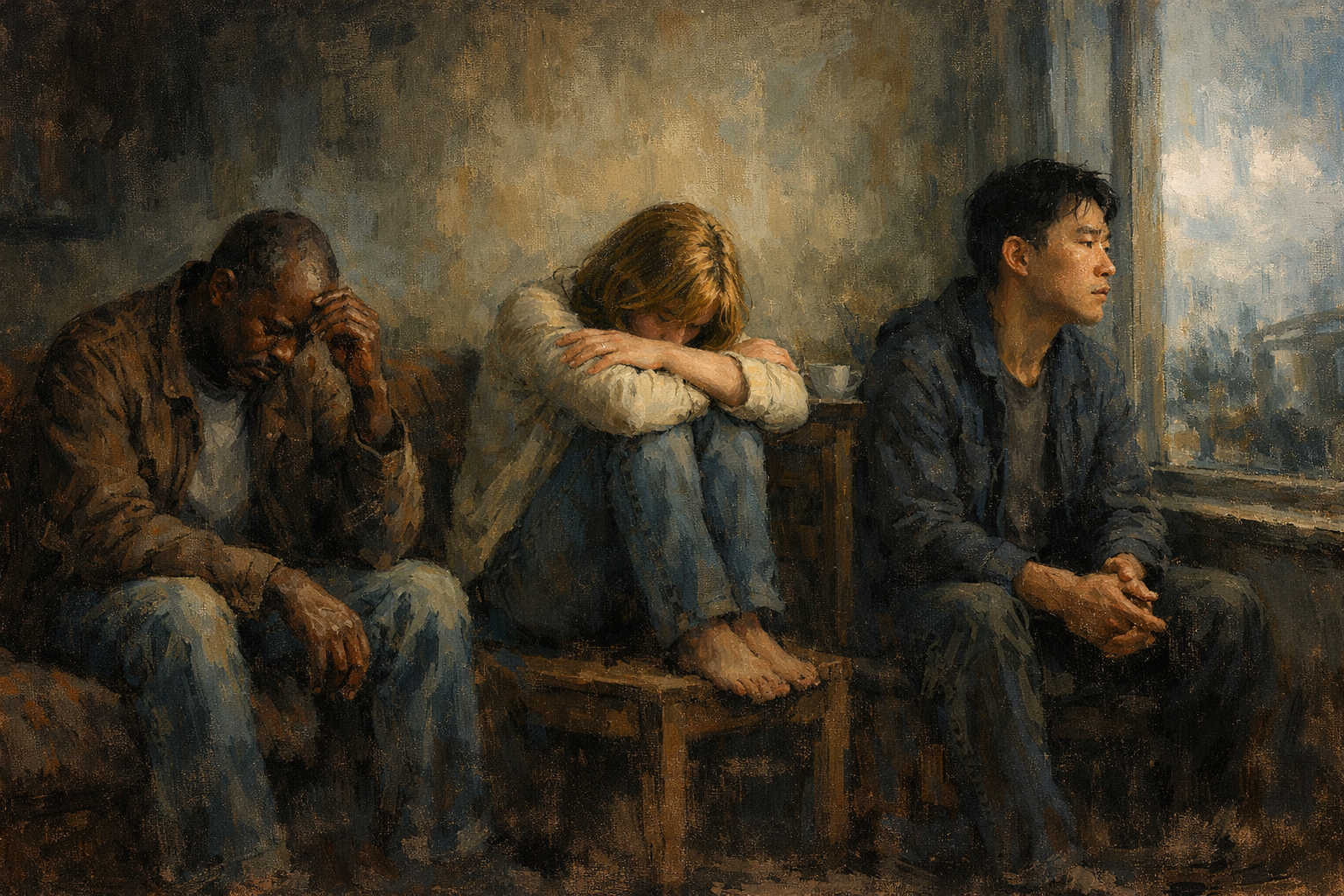
We tend to treat loneliness like a passing mood. A quiet weekend. A birthday with fewer texts than expected. A stretch of nights where the house feels a little too silent. We brush it off, say we’re tired or busy or “focusing on ourselves,” and move on. It sounds harmless. Almost mature. But loneliness is not just a feeling. It is a biological signal, and your body takes it far more seriously than your mind does.
For most of human history, being alone was genuinely dangerous. If you were separated from your group, your odds of survival dropped fast. There was no grocery store, no emergency room, no food delivery app. There was exposure, hunger, and predators. So the human brain evolved to treat social isolation as a direct threat to survival. That wiring is still inside you, running quietly in the background whether you are aware of it or not. When you feel chronically lonely, your brain activates stress responses: cortisol rises, your heart rate shifts, your sleep becomes lighter and more restless, and your immune system changes how it functions. Your body is preparing for danger even if you are just sitting on your couch. Your nervous system does not care that you have Wi-Fi. It cares that you feel alone.
The Health Risks We Rarely Talk About
Research over the last two decades has made one thing painfully clear: chronic loneliness is linked to serious, measurable health risks. Higher rates of heart disease. Increased risk of stroke. Greater likelihood of depression and anxiety. Even cognitive decline later in life. Some large studies have suggested that prolonged social isolation carries health risks comparable to smoking multiple cigarettes a day. That comparison is not meant to be dramatic. It is meant to be honest. We warn people about tobacco constantly. We almost never warn them about disconnection.
Loneliness increases inflammation in the body, and inflammation is helpful in short bursts but damaging when it lingers. Over time, chronic inflammation contributes to disease at the cellular level. Add elevated stress hormones and disrupted sleep on top of that, and the body begins to wear down in ways that accumulate quietly for years before becoming visible. This is not weakness. It is biology responding to unmet social needs, exactly as it was designed to do.
Independence Is Not the Same as Strength
Modern culture loves the image of the self-sufficient person. The one who does not need anyone. The one who grinds alone and wins alone. We share quotes about cutting people off and protecting our peace as if isolation is always empowerment. Some independence is healthy, and boundaries matter. Solitude can be genuinely restorative. But chronic disconnection is not strength. It is strain disguised as pride, and the body knows the difference even when the mind has convinced itself otherwise.
Humans are wired for interdependence. That means mutual support without losing individuality, being capable and connected at the same time, knowing you can stand alone but choosing not to live that way all the time. The lone wolf story sounds powerful in a caption. Real wolves, the actual animals, travel in packs because survival depends on it. The metaphor works better than most people realize.
You Can Be Surrounded and Still Feel Invisible
Loneliness is not about how many people you know. It is about how known you feel. You can sit in a busy office or at a loud dinner table and still feel like no one truly sees you. You can have hundreds of followers online and not one person you would call at 2 a.m. if life fell apart. The gap between surface interaction and real connection is exactly where loneliness grows. If you are constantly performing but rarely understood, the nervous system stays unsettled. It senses that something essential is missing, and that gap feels manageable at first. Over time it widens.
Brain imaging studies show that social pain activates similar regions in the brain as physical pain. Rejection and isolation light up neural pathways in ways that closely resemble a physical injury. That is why being excluded can feel like a punch to the chest, because neurologically, it is not far off. Your brain is not being dramatic. It is doing its job, trying to motivate you back toward the connection it knows you need.

The Convenience Trap
We built a world optimized for efficiency. You can work from home, order food without speaking to anyone, stream endless entertainment, and manage your entire life from a phone. On paper, that sounds like freedom. In practice, it quietly eliminates the daily friction that used to generate human contact. Friction is not always bad. Friction used to mean chatting with a cashier, bumping into a neighbor, sitting next to coworkers, attending community events because there were fewer alternatives. Those small, low-stakes interactions layered into a background sense of belonging. Many of those layers are now gone.
We gained convenience. We lost contact. Technology is not the villain in this story, but convenience quietly replaced community, and most people did not notice the trade until the silence got loud.
Remote Life and the Shrinking Social Circle
In recent years, more people have worked remotely, moved frequently for opportunity, or delayed traditional milestones like marriage and long-term community roots. These shifts are not automatically negative. Flexibility has real benefits. But flexibility without intentional connection can shrink social circles faster than people expect. When work no longer requires physical presence, you lose the casual hallway conversations and shared lunches that used to happen without any planning. When you move for a new job, you leave behind support systems that took years to build. When schedules stay packed, friendships quietly slide to the bottom of the list. Nobody announces that you are drifting toward isolation. It just happens, slowly, until it doesn’t feel slow anymore.

Why Loneliness Changes How You See the World
Chronic loneliness does more than hurt emotionally. It can shift perception in ways that make reconnection harder. When someone has felt isolated for a long time, the brain becomes more alert to social threats. Neutral comments can feel like criticism. Delayed replies can feel like rejection. Small misunderstandings feel larger than they are. This is not a character flaw. It is a nervous system on high alert, scanning constantly for the danger it has been trained to expect.
When the brain senses social danger, it encourages withdrawal to prevent further pain. But withdrawal reduces connection, which deepens loneliness, which increases vigilance. That loop can run for years if it goes unaddressed. Breaking it requires intention and patience, not a personality overhaul.
Small Steps That Actually Help
Research points to a few consistent patterns that reduce loneliness over time. Joining something that meets regularly is one of the most reliable. A class, a volunteer group, a fitness club, a faith community, or a hobby circle. The key ingredient is regular contact, not intensity or immediate depth. Familiarity builds slowly, and that is fine. Consistency matters more than charisma. You do not need to become the loudest person in the room. You need to return to the room often enough to become a familiar face.
Contribution also helps in a distinct way. When you help others, you create a sense of purpose and belonging that passive presence cannot replicate. Being needed shifts you from observer to participant, and that shift registers in the nervous system. Depth matters more than breadth, too. One honest conversation does more for your sense of connection than fifty surface-level exchanges. And physical presence carries weight that digital contact cannot fully match. Eye contact, shared laughter, and tone of voice regulate the body in ways that a text thread cannot.

Belonging Is a Health Strategy
We talk constantly about diet, exercise, sleep, and productivity. We count steps and track macros and optimize our morning routines. Rarely do we treat belonging with the same seriousness. Maybe we should. Strong social ties are associated with lower stress levels, better immune function, improved heart health, and longer life expectancy. People with meaningful connections recover from illness faster, cope with hardship more effectively, and report greater life satisfaction across nearly every measure researchers have studied.
Connection is not a soft priority. It is maintenance for the human system. Loneliness is not just sadness. It is a signal that something essential is missing, and your body is not trying to embarrass you by sending it. It is trying to keep you functional and alive. So if you feel it, listen with intention rather than shame. Reach outward. Build slowly. Show up consistently. Let yourself be known in small, real ways. Your health depends on more than what you eat or how much you lift. It depends on who sits across from you at the table.
Call to Action
Loneliness rarely announces itself loudly. It tends to settle in quietly, disguised as busyness or independence or just the way things are right now. If any part of this post felt familiar, that recognition is worth sitting with.
The Eight-Room Reset Guide was built for moments exactly like this one. It looks at eight connected areas of well-being, including your social and emotional life, and helps you see what is quietly asking for attention before you decide what to do about it. No pressure to fix everything at once. Just a clearer picture of where you actually are.
Download the free guide at Good Time To Shine and take one honest look at the full picture.
Ronnie Canty | Good Time To Shine