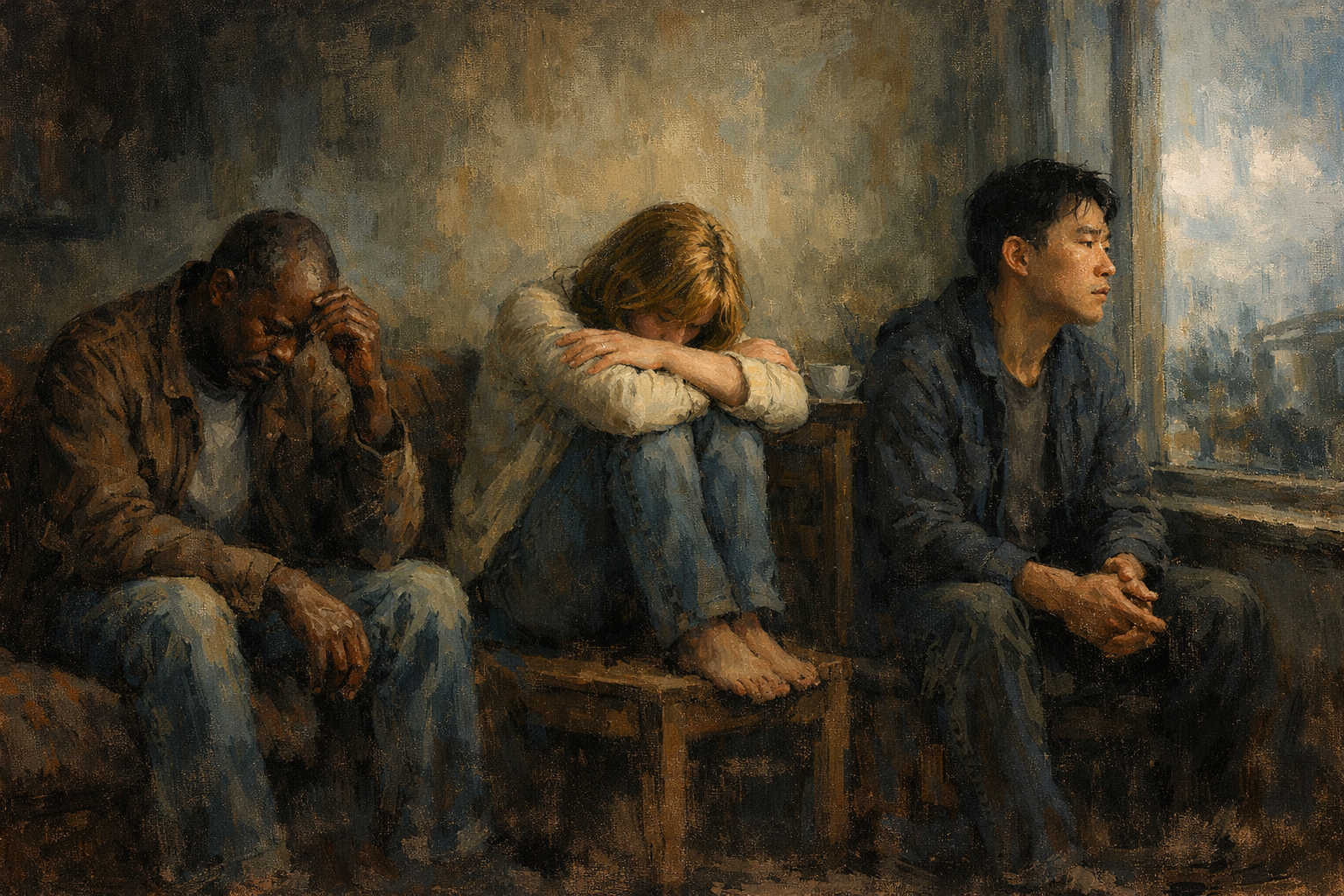

We tend to treat loneliness like a passing mood. A quiet weekend. A birthday with fewer texts than expected. A stretch of nights where the house feels a little too silent. We brush it off and say we are just tired or busy or “focusing on ourselves.” It sounds harmless. Almost mature.
But loneliness is not just a feeling.
It is a biological signal.
And your body takes it very seriously.
For most of human history, being alone was dangerous. If you were separated from your group, your odds of survival dropped fast. There was no grocery store, no emergency room, no food delivery app. There was exposure, hunger, and risk. So the human brain evolved to treat social isolation as a threat to survival.
That wiring is still inside you.
When you feel chronically lonely, your brain activates stress responses. Cortisol rises. Your heart rate shifts. Your sleep can become lighter and more restless. Your immune system changes how it functions. Your body is preparing for danger even if you are just sitting on your couch watching television.
Your nervous system does not care that you have Wi-Fi. It cares that you feel alone.
The Health Risks We Rarely Talk About
Research over the last two decades has made one thing painfully clear. Chronic loneliness is linked to serious health risks. Higher rates of heart disease. Increased risk of stroke. Greater likelihood of depression and anxiety. Even cognitive decline later in life.
Some large studies have suggested that prolonged social isolation carries health risks similar to smoking multiple cigarettes a day. That comparison is not meant to be dramatic. It is meant to be honest. We warn people about tobacco constantly. We almost never warn them about disconnection.
Loneliness increases inflammation in the body. Inflammation is helpful in short bursts, but harmful when it lingers. Over time, chronic inflammation contributes to disease. Add in elevated stress hormones and poor sleep, and the body begins to wear down.
This is not weakness.
It is biology responding to unmet social needs.
Independence Is Not the Same as Strength
Modern culture loves the image of the self-sufficient person. The one who “does not need anyone.” The one who grinds alone and wins alone. We post quotes about cutting people off and protecting our peace as if isolation is always empowerment.
Some independence is healthy. Boundaries matter. Solitude can be restorative. But chronic disconnection is not strength. It is strain disguised as pride.
Humans are wired for interdependence. That means mutual support without losing individuality. It means being capable and connected at the same time. It means knowing you can stand alone, but choosing not to live that way all the time.
The lone wolf story sounds powerful.
Real wolves travel in packs.
You Can Be Surrounded and Still Feel Invisible
Loneliness is not about how many people you know. It is about how known you feel. You can sit in a busy office or at a loud dinner table and still feel like no one truly sees you. You can have hundreds of followers online and not one person you would call at 2 a.m. if life fell apart.
The gap between surface interaction and real connection is where loneliness grows. If you are constantly performing but rarely understood, the nervous system stays unsettled. It senses that something is missing. That gap feels small at first, but over time it widens.
And it hurts.
Brain imaging studies show that social pain activates similar regions as physical pain. In simple terms, rejection and isolation light up the brain in ways that look a lot like a physical injury. That is why being excluded can feel like a punch to the chest.
Your brain is not being dramatic. It is trying to protect you.

The Convenience Trap
We built a world optimized for efficiency. You can work from home, order food without speaking to anyone, stream endless entertainment, and manage your entire life from a phone. On paper, it sounds like freedom. In practice, it often reduces daily human friction.
Friction is not always bad.
Friction used to mean chatting with a cashier, bumping into neighbors, sitting next to coworkers, attending community events because there were fewer alternatives. Those small interactions layered into a sense of belonging. Now many of those layers are gone.
We gained convenience. We lost contact.
It is not that technology is evil. It is that convenience quietly replaced community. And we did not notice the trade until the silence got loud.
Remote Life and the Shrinking Social Circle
In recent years, more people have worked remotely, moved frequently, or delayed traditional milestones like marriage and family. These shifts are not automatically negative. Flexibility has real benefits. But flexibility without intentional connection can shrink social circles quickly.
When work no longer requires physical presence, you lose casual hallway conversations and shared lunches. When you move for opportunity, you leave behind built-in support systems. When schedules stay packed, friendships slide to the bottom of the list.
No one announces that you are drifting into isolation.
It just happens slowly.
Why Loneliness Changes How You See the World
Chronic loneliness does more than hurt emotionally. It can shift perception. When someone feels isolated for a long time, the brain becomes more alert to social threats. Neutral comments can feel like criticism. Delayed replies can feel like rejection. Small misunderstandings feel bigger.
This is not a character flaw.
It is a nervous system on guard.
When the brain senses social danger, it encourages withdrawal to prevent further pain. But withdrawal reduces connection, which increases loneliness, which increases vigilance. That loop can continue for years if it goes unaddressed.
Breaking it requires intention and patience.

The Myth of “Just Put Yourself Out There”
Well-meaning advice often sounds simple. Join a group. Be more social. Get out more. For someone who feels deeply lonely, that advice can feel overwhelming. Walking into a room full of strangers is not easy when your brain already expects rejection.
Connection does not usually come from dramatic reinvention. It comes from repetition. Seeing the same faces regularly lowers anxiety. Familiarity builds trust slowly. Over time, short conversations grow into longer ones.
Consistency matters more than charisma.
You do not need to become the loudest person in the room. You need to return to the room often enough to become familiar.
Small Steps That Actually Help
Research points to a few patterns that reduce loneliness over time. One is joining something that meets consistently. A class, a volunteer group, a fitness club, a faith community, or a hobby circle. The key is regular contact, not intensity.
Another is contribution. Helping others creates a sense of purpose and belonging. When you are needed, you feel connected in a different way than when you are simply present. Contribution shifts you from observer to participant.
Depth also matters more than breadth. One honest conversation can do more for your nervous system than fifty surface-level exchanges. Investing in a few relationships with real vulnerability creates stability that large networks often lack.
And yes, physical presence makes a difference. Eye contact, tone of voice, shared laughter in the same space all regulate the body in ways text cannot replicate.
The Courage to Admit It
There is a quiet shame around loneliness. People often assume that if they were more interesting or more successful, they would not feel this way. That belief keeps them silent. Silence deepens isolation.
Admitting loneliness is not weakness. It is awareness.
Most people feel lonely at some point. Many feel it right now. The difference between those who stay stuck and those who move forward is often the willingness to name it and take one small step toward connection.
Send the message. Suggest the coffee. Reconnect with the old friend. Introduce yourself to the neighbor. It might feel awkward. Awkward will not harm you.
Chronic isolation might.

Belonging Is a Health Strategy
We talk constantly about diet, exercise, and productivity. We count steps and track calories. We chase promotions and personal bests. Rarely do we treat belonging as a measurable health practice.
Maybe we should.
Strong social ties are associated with lower stress levels, better immune function, improved heart health, and longer life expectancy. People with meaningful connections recover from illness faster. They cope with hardship more effectively. They report greater life satisfaction.
Connection is not a luxury.
It is maintenance for the human system.
Loneliness is not just sadness. It is a signal that something essential is missing. Your body is not trying to embarrass you. It is trying to keep you alive.
So if you feel it, listen.
Not with panic.
With intention.
Reach outward. Build slowly. Show up consistently. Let yourself be known in small, real ways. Your health depends on more than what you eat or how much you lift.
It depends on who sits across from you at the table.
If something here resonated, don’t rush past it.
Growth rarely needs a dramatic overhaul. It needs a small, intentional pause and a better next step.
Join the Good Time To Shine newsletter for thoughtful reflections, practical tools, and a free guide designed to help you check in with your whole life, not just the loud parts.
No pressure. No noise. Just support that meets you where you are.
Subscribe and download the free guide.
One thoughtful step is enough for today.
Canty